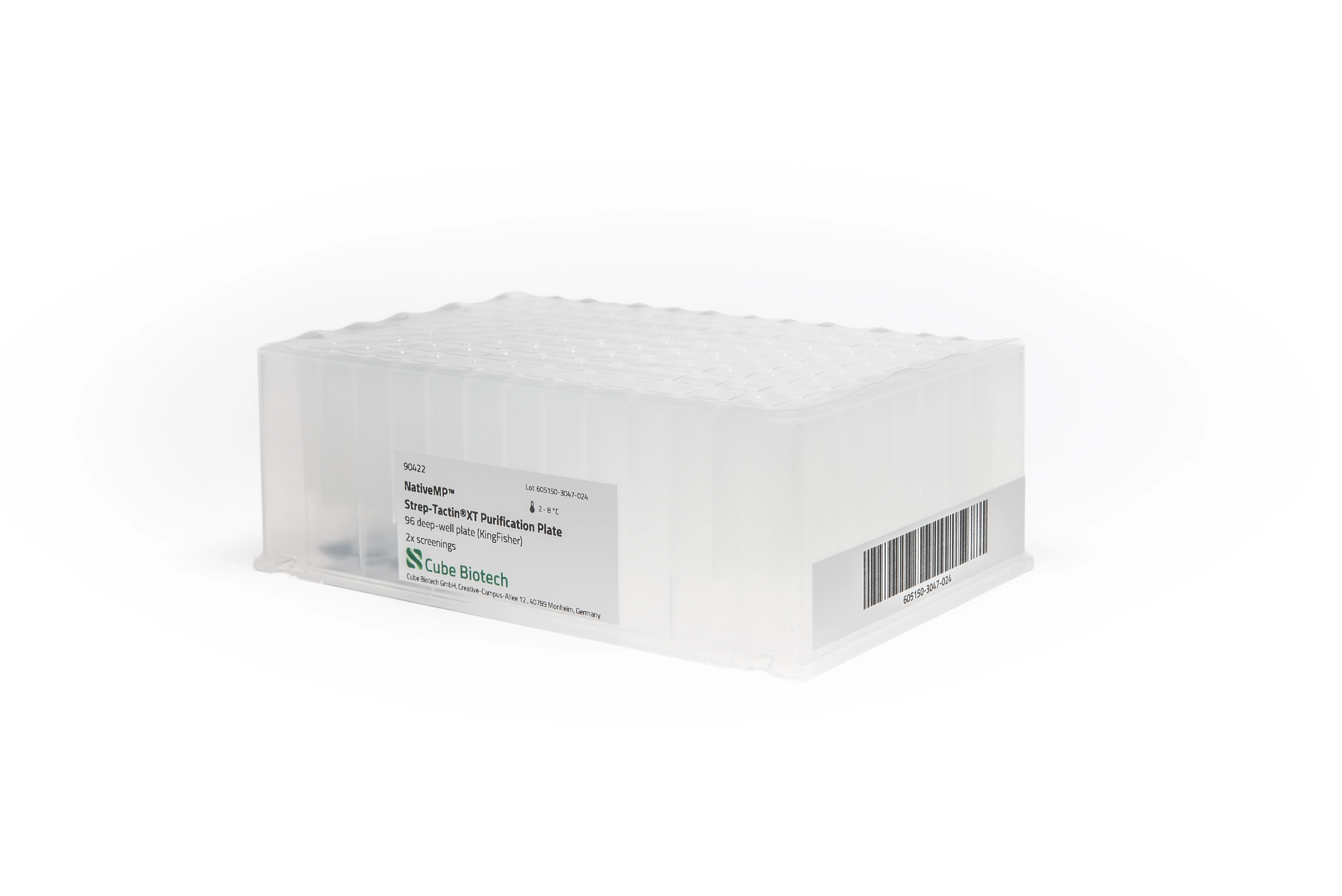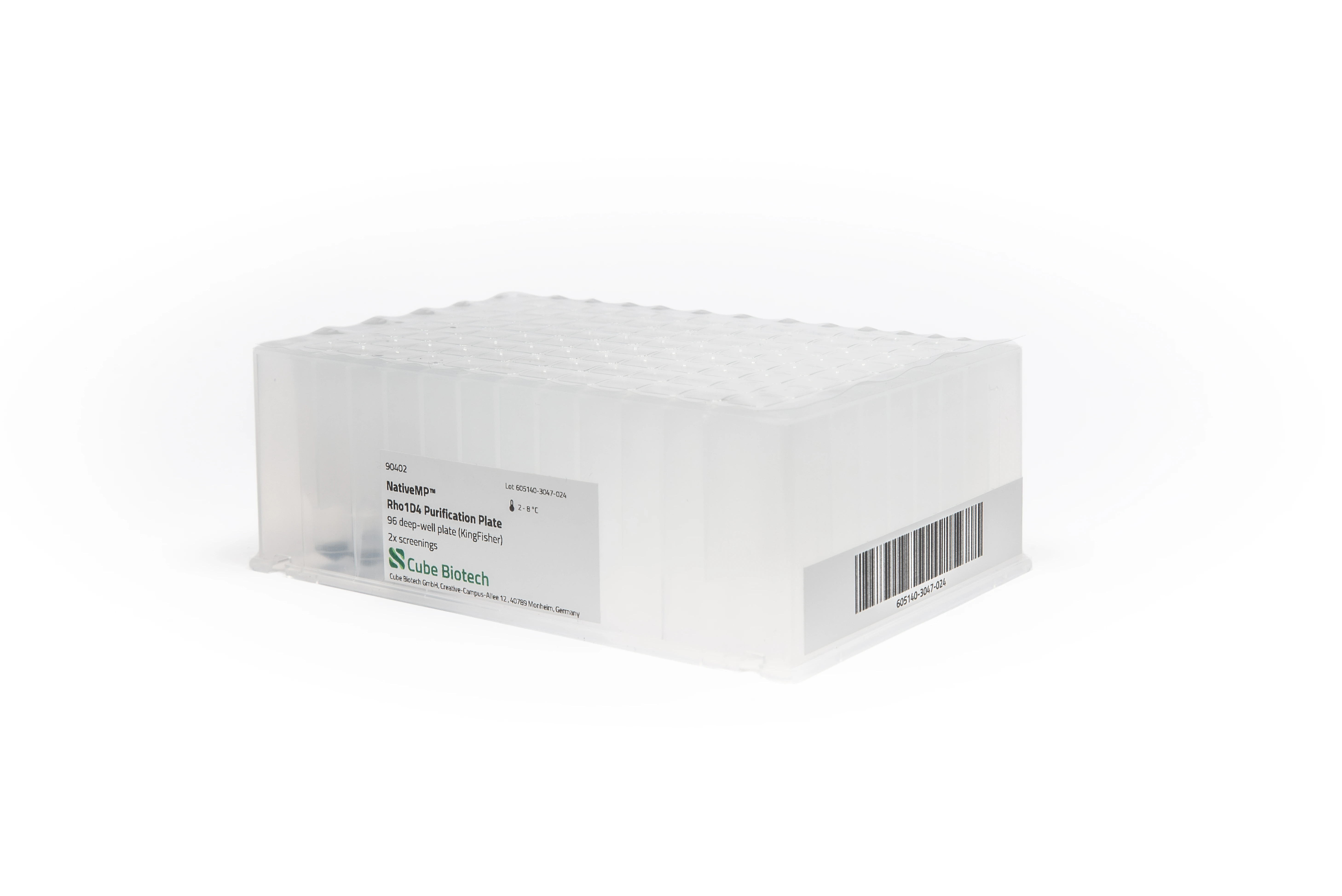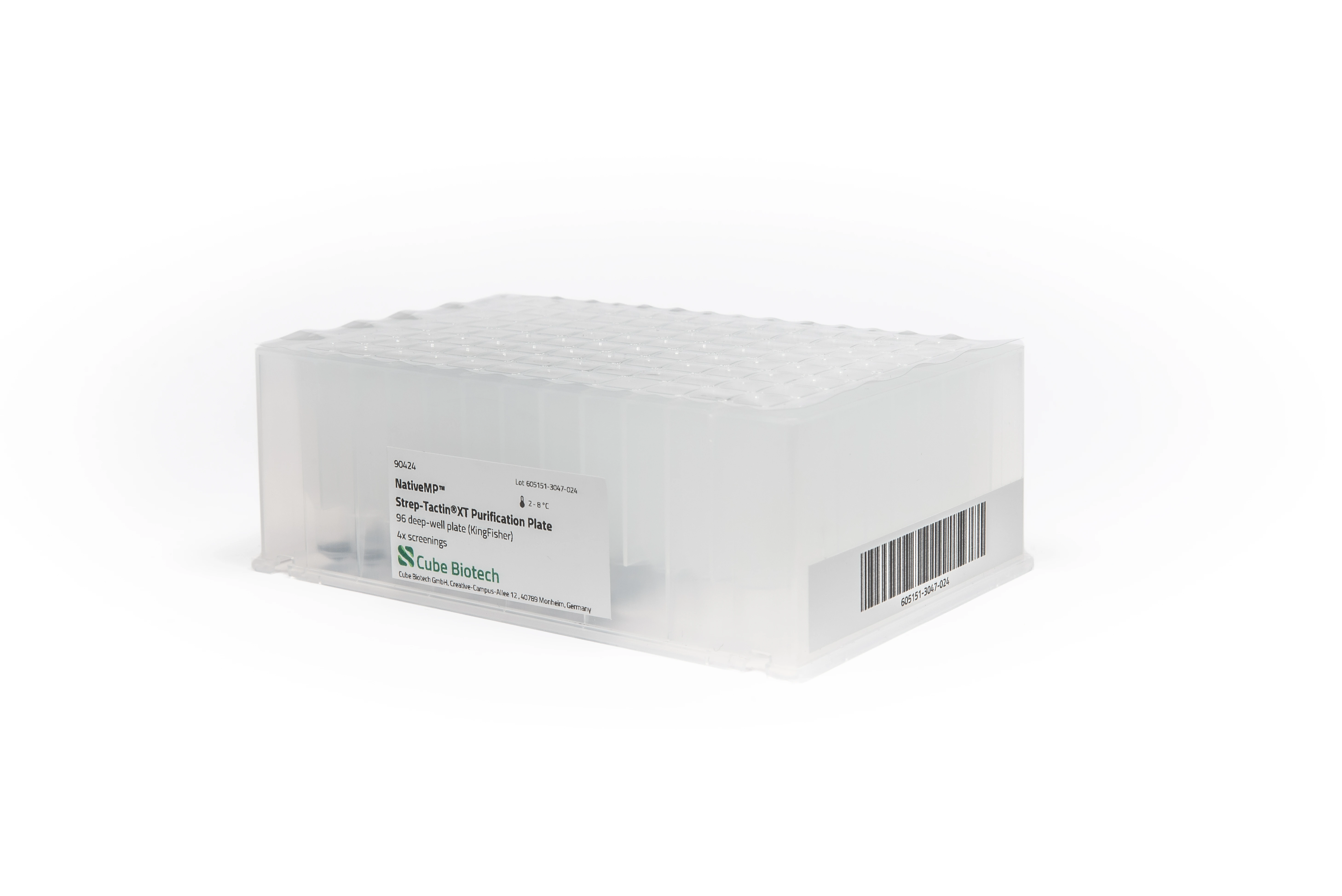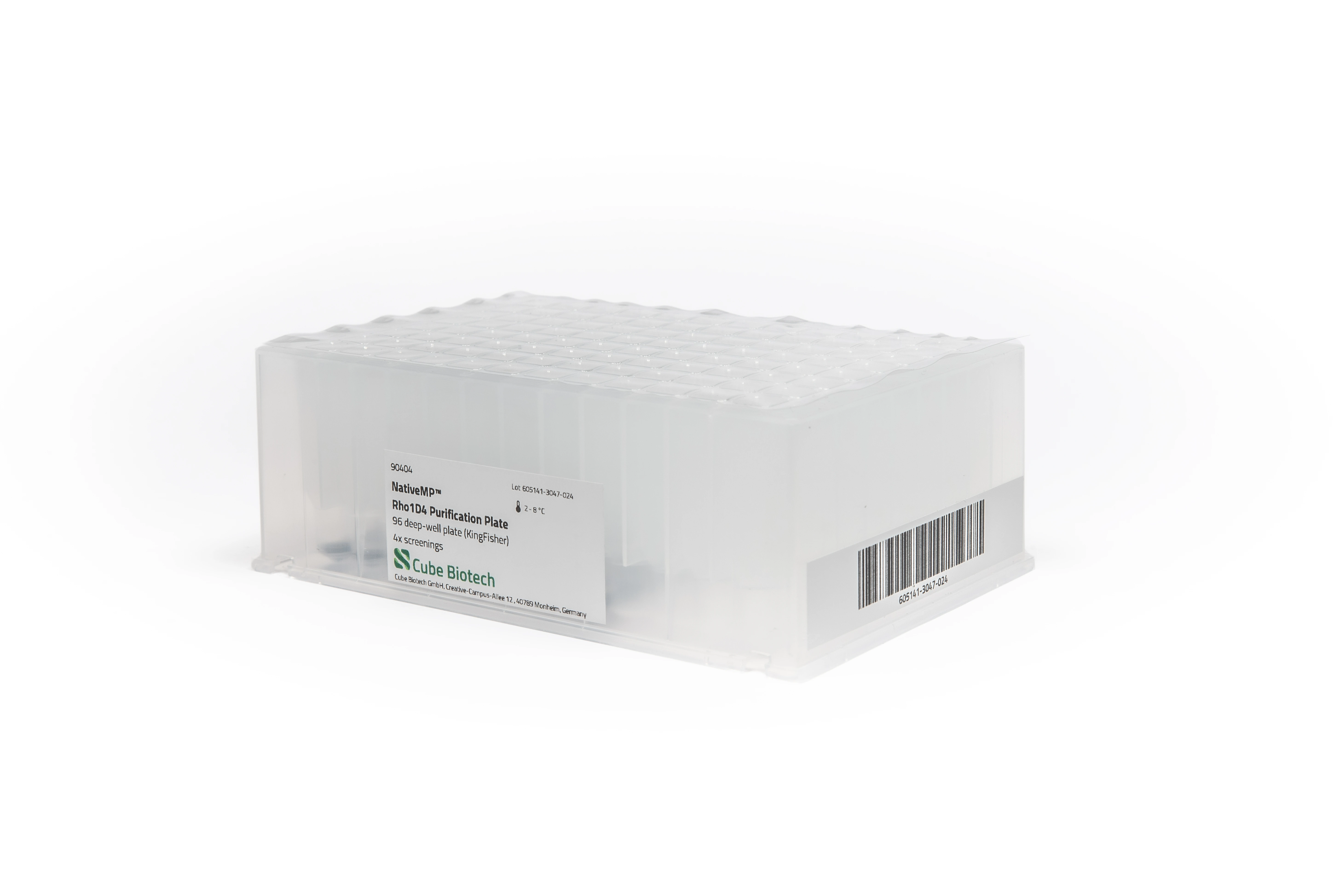

A standardized route to broader
Membrane Protein Screening & Purification
Start with 2 standardized screens & scale effortless
up to 6 - optimized for your workflow
Membrane protein purification should be easy!
But in practice, membrane proteins require special attention, especially if you need to preserve native protein properties for downstream assays.
Top 3 bottlenecks in membrane protein purification
Manual handling
- Protocols are long
- It's error-prone and can be user-dependent
- Purifying many samples manually is not scalable
Optimising conditions
- Each protein behaves differently
- Ideal conditions cannot be predicted - screening is essential
- This adds time and complexity to the purification stage of a project
Preserving native
protein behaviour
- Solubilisation and stabilisation agents are key for native protein prep
- Traditional protocols remove native lipid environment with detergents
- Identifying best solubilisation agent takes time
Get the KingFisher™ Flex Screening & Purification Protocol
NativeMP™ Screening & Purification Plates made to scale
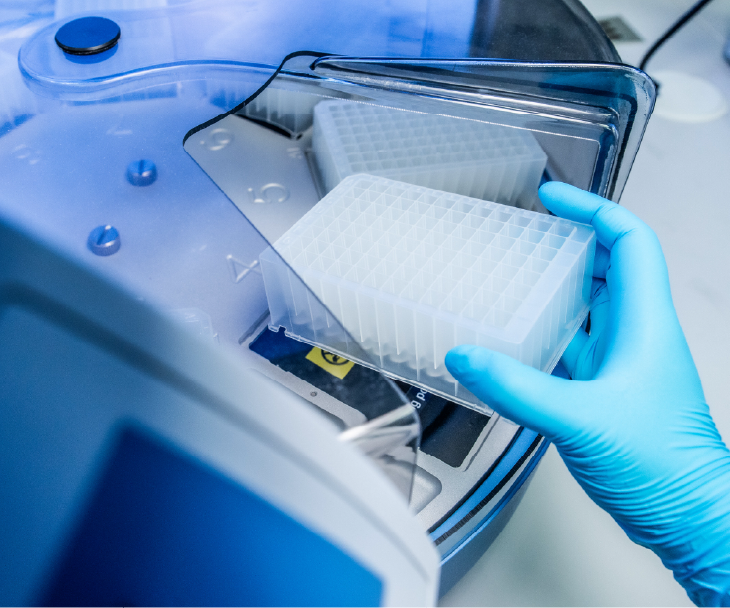
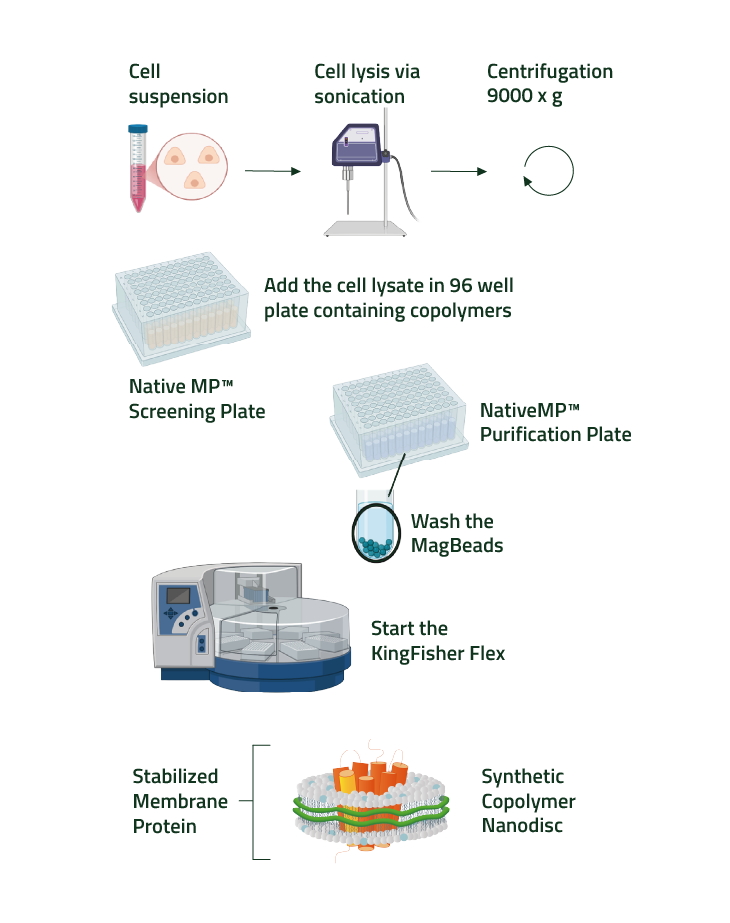
NativeMP™ Screening & Purification plates are a ready-to-run product, designed for use with KingFisher™ Flex. The workflow combines two experimental processes in a single run:
Screening
for optimal solubilisation tools that preserve native protein properties.
Purification
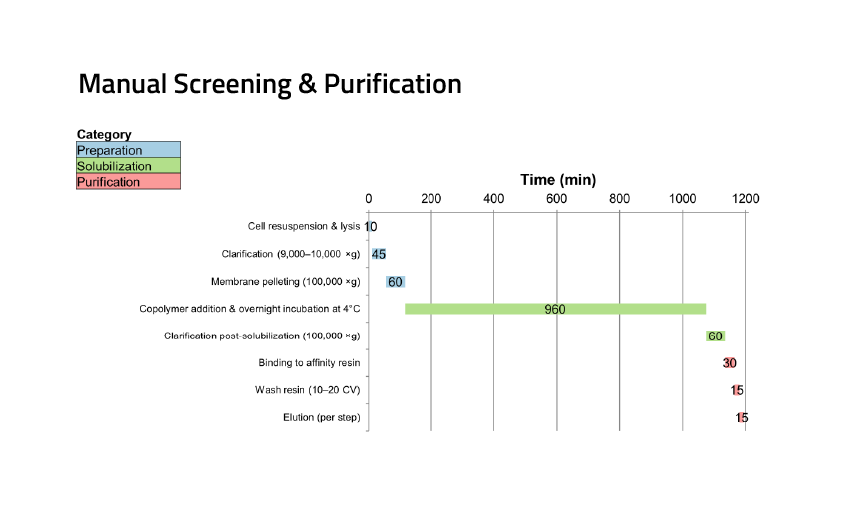
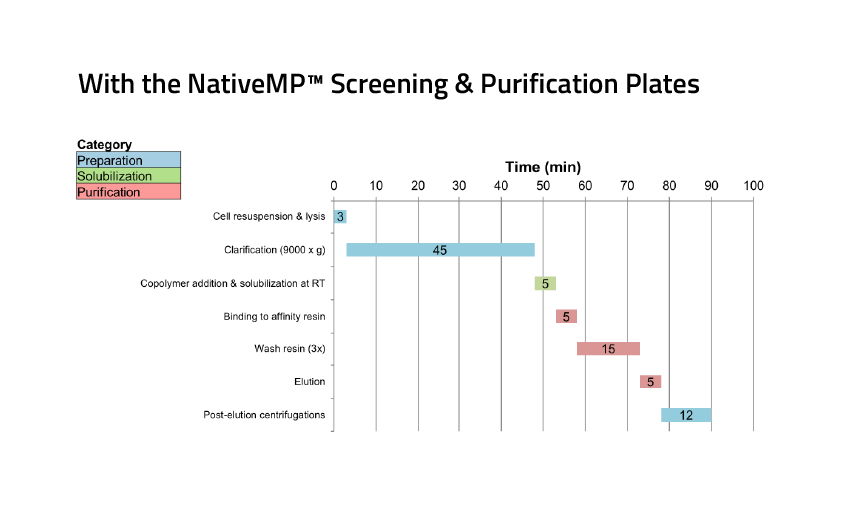
of membrane proteins that deliver analytical-grade proteins in just 90 minutes instead of 20 hours.
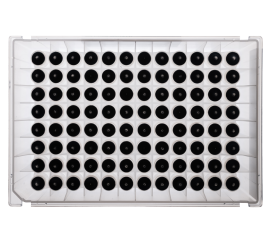
3 Components - One Automated Workflow
For membrane protein screening to purification you just need 3 components
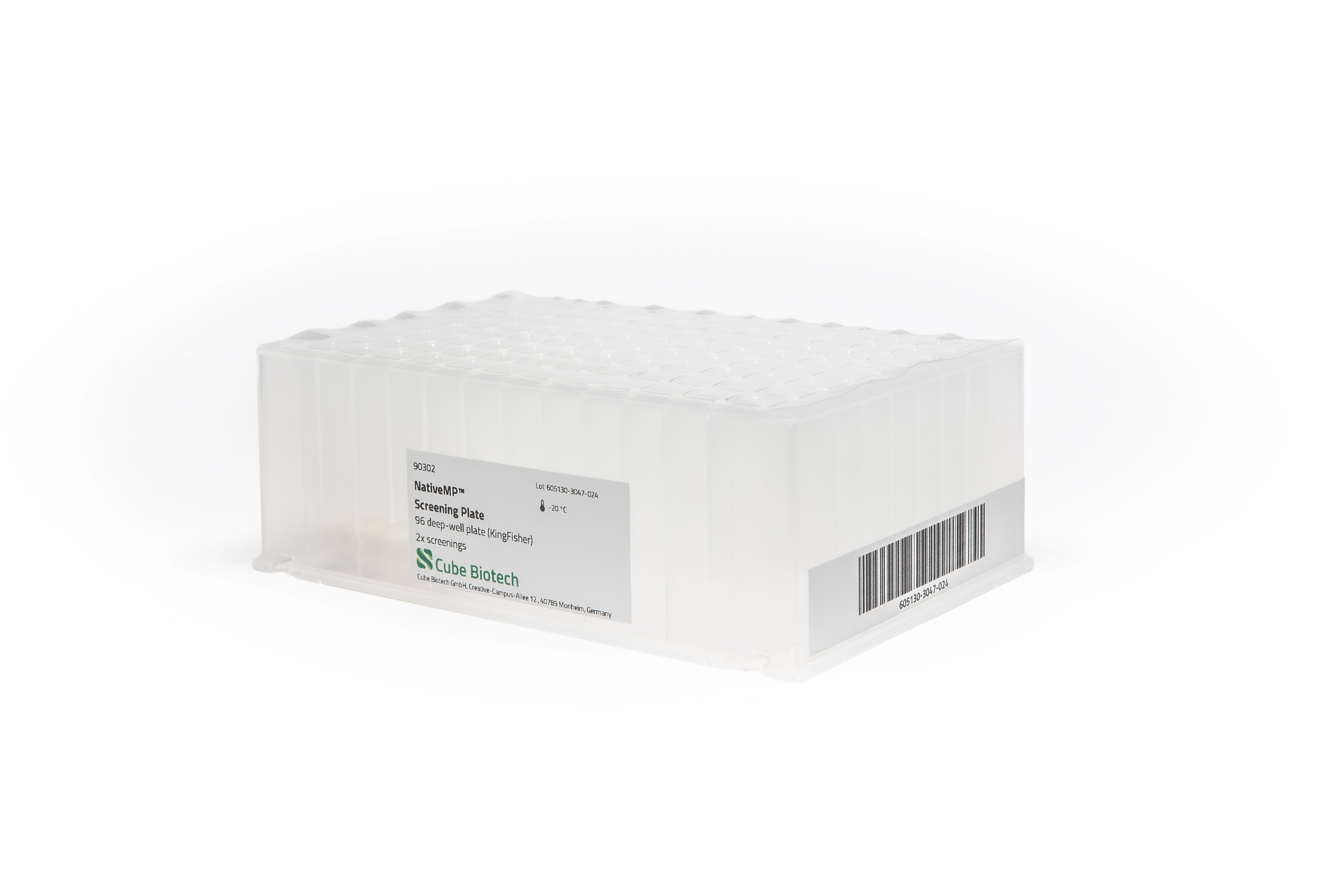
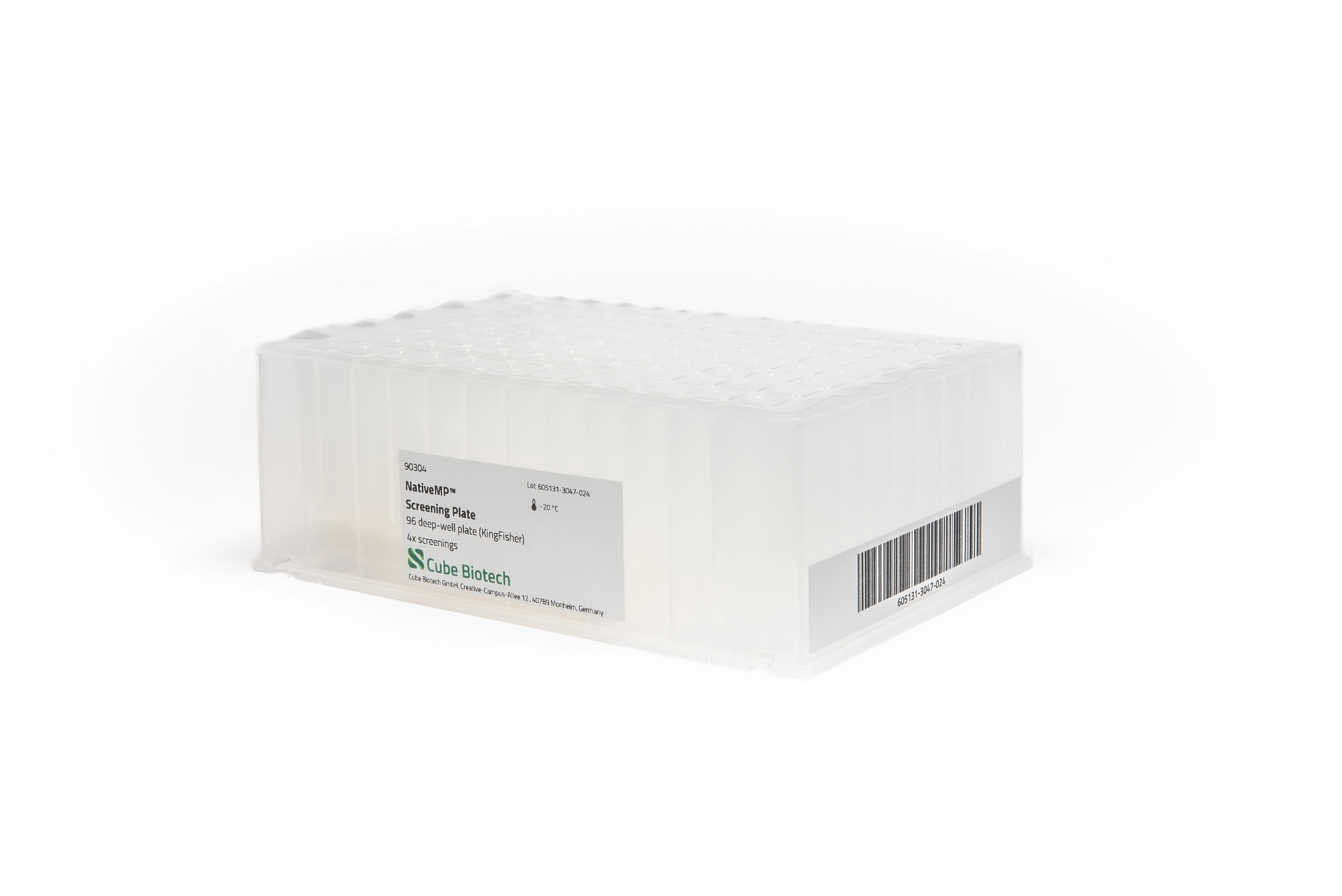
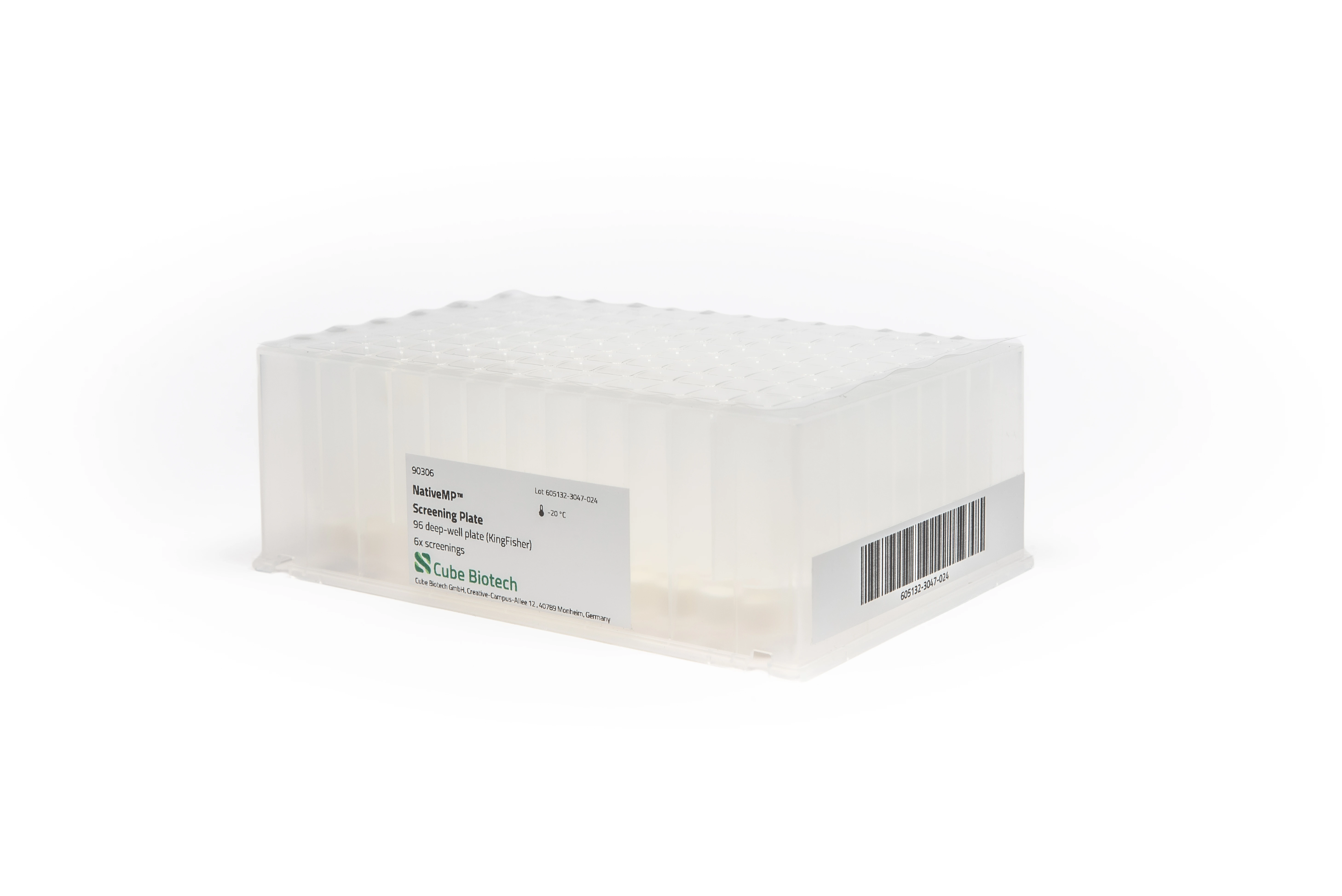
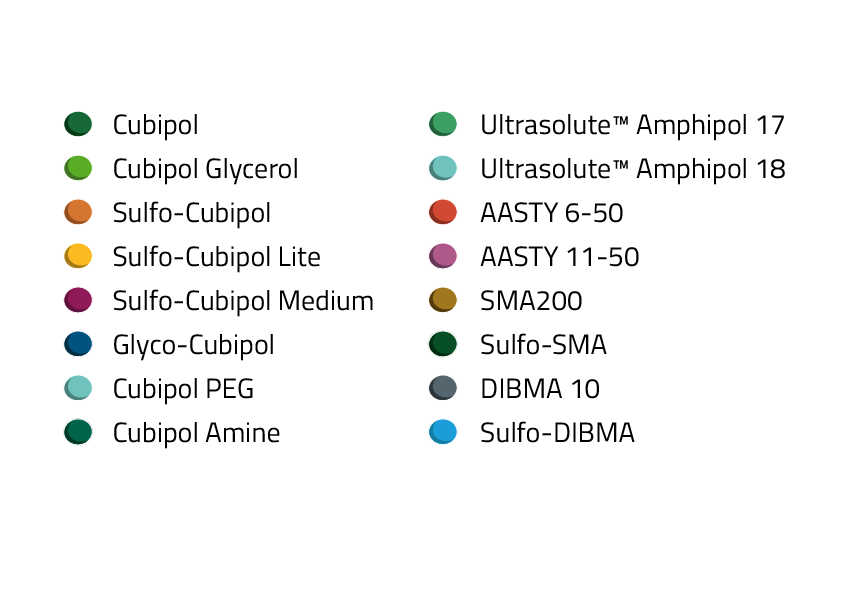
1. NativeMP™ Screening Plate: Preloaded with 16 selected copolymers
2. NativeMP™ Purification Plates: Choose your affinity MagBeads
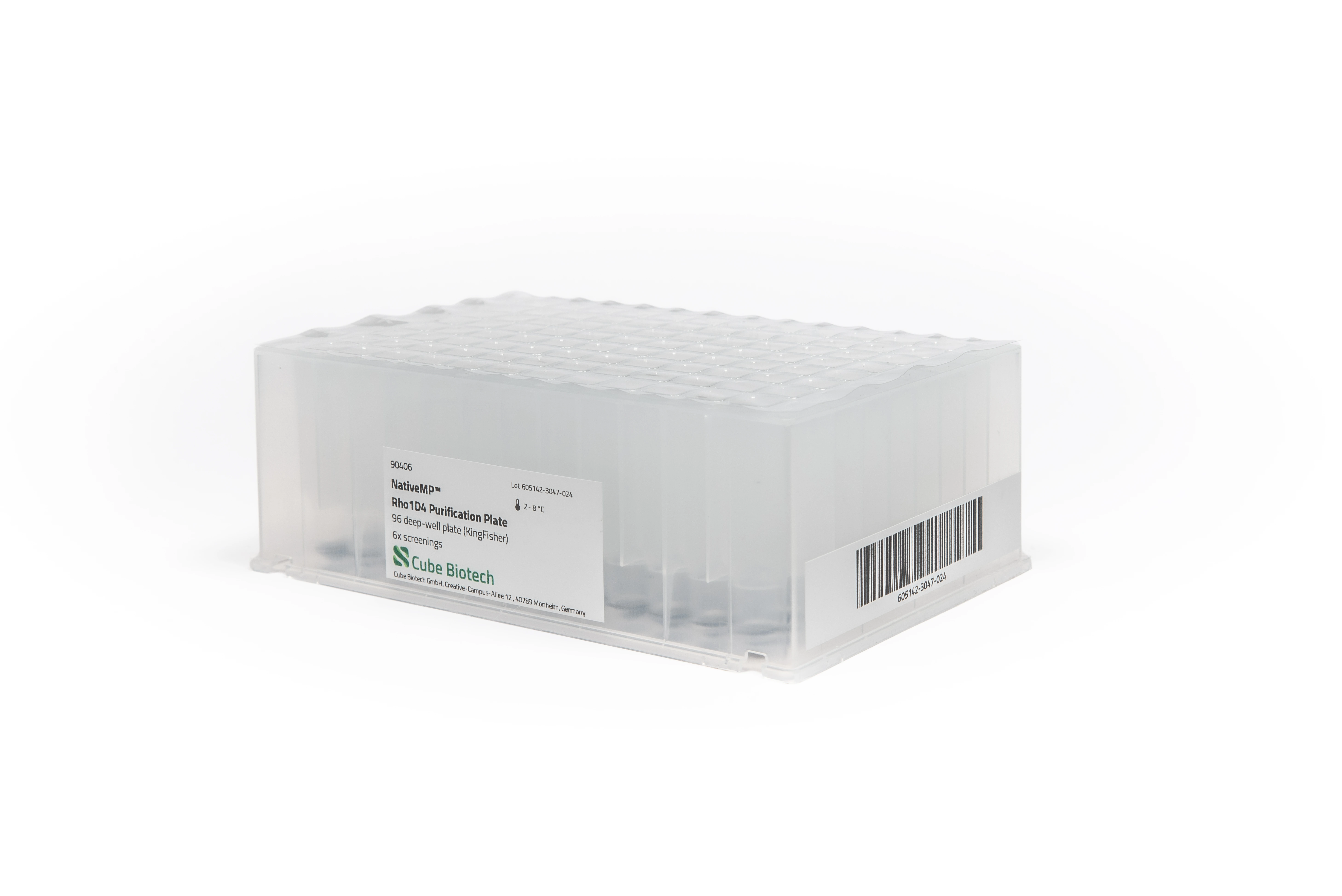
a.) Rho1D4 MagBeads Rho1D4 Protocol
b.) Strep-Tactin®XT MagBeads Strep-Tactin®XT Protocol
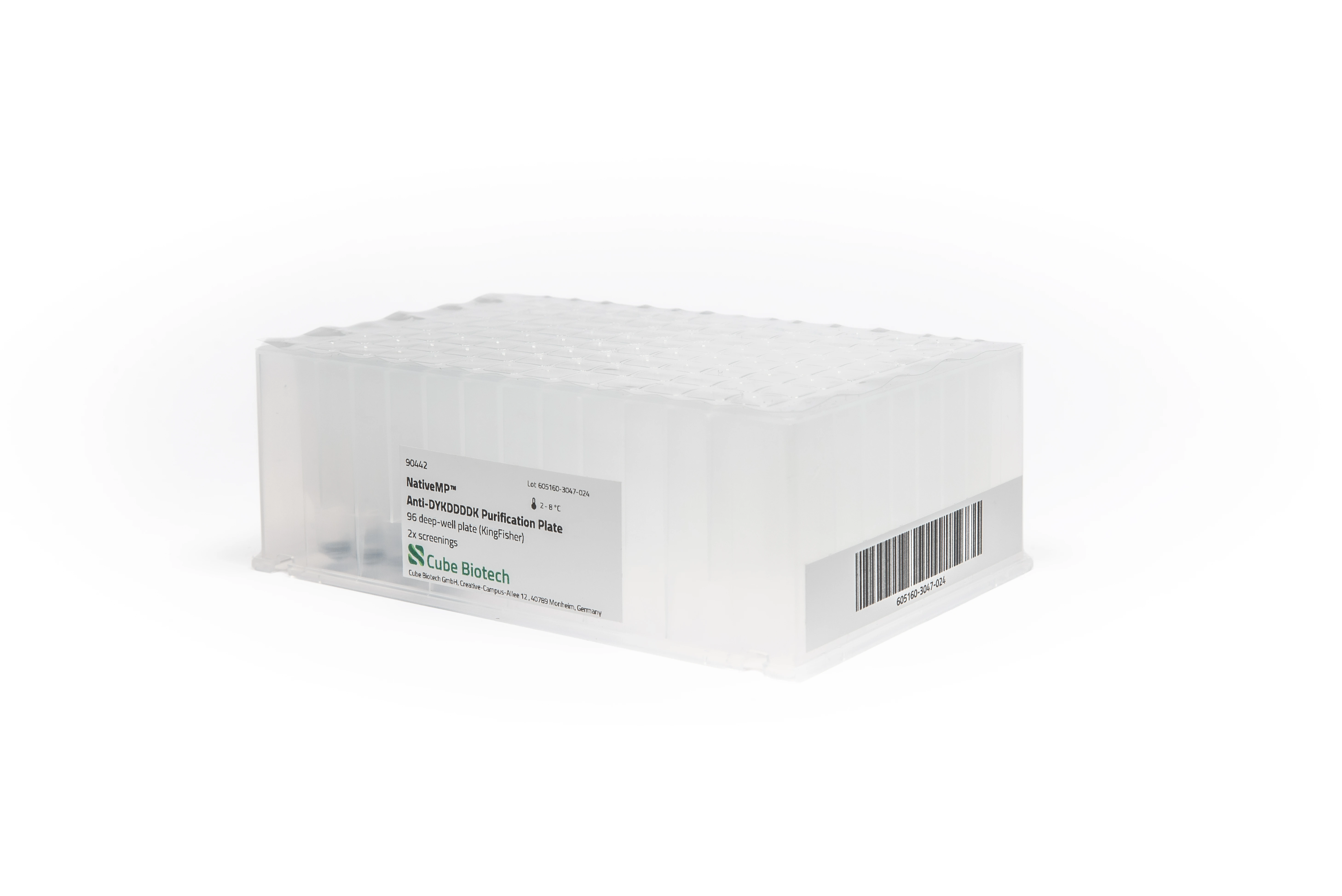
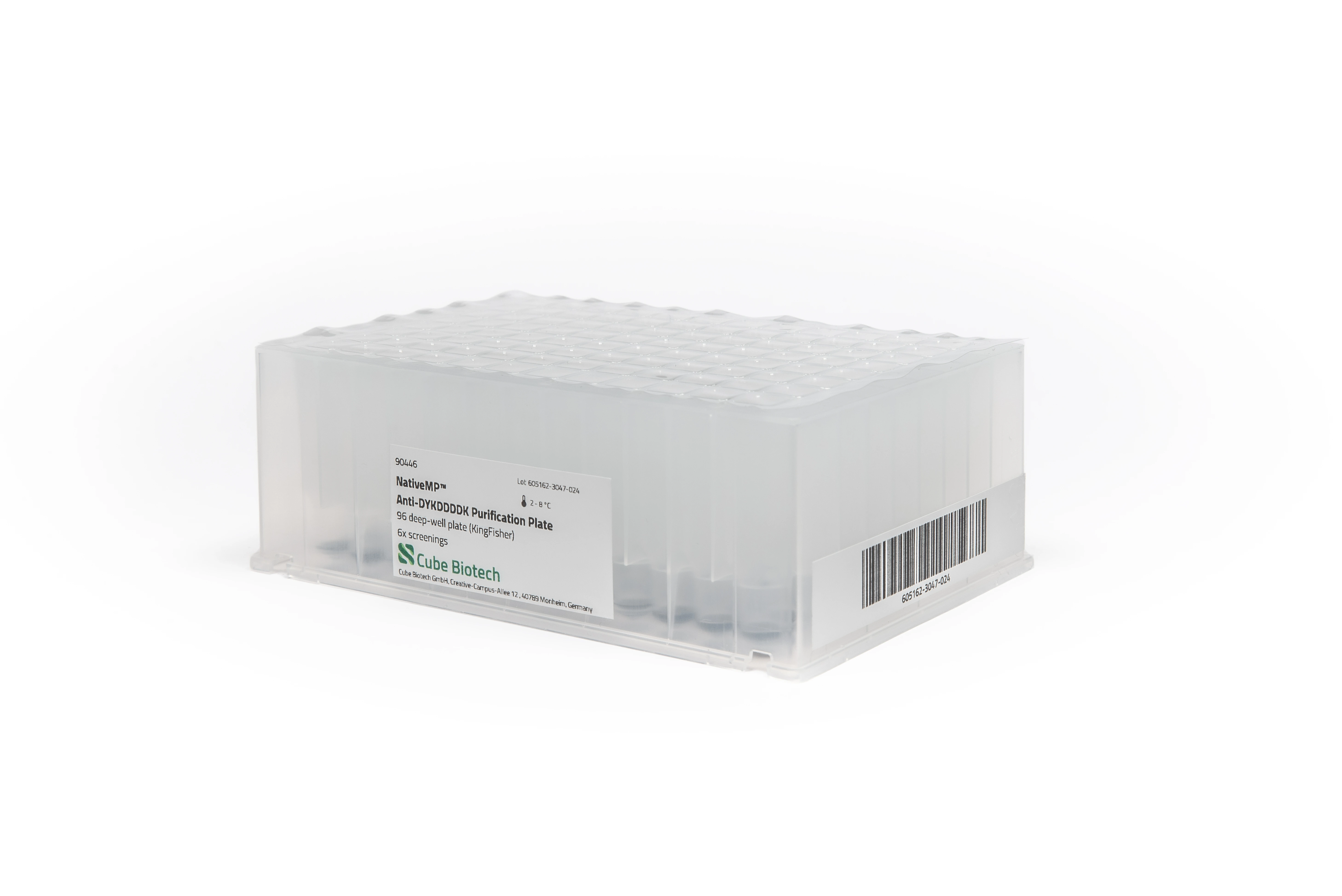
c.) Anti-DYKDDDDK MagBeads Anti-DYKDDDDK Protocol
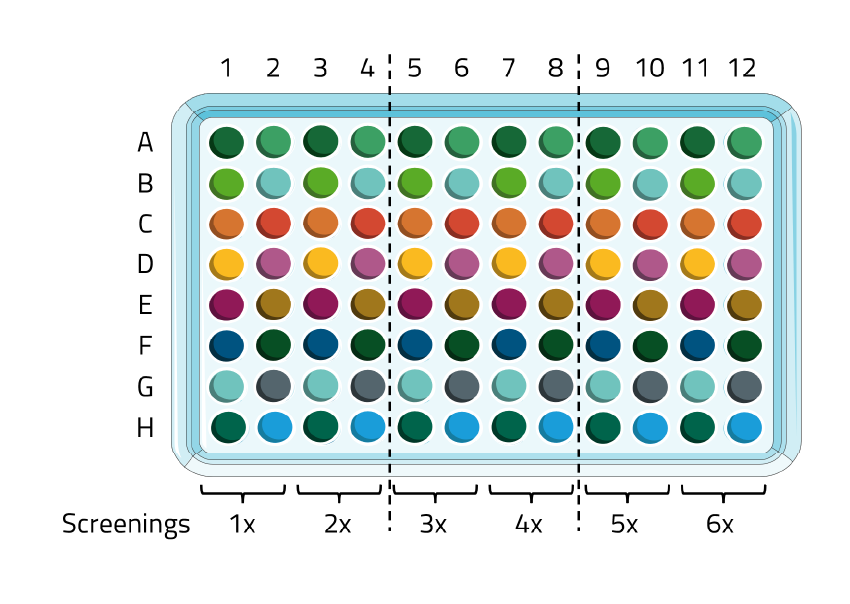
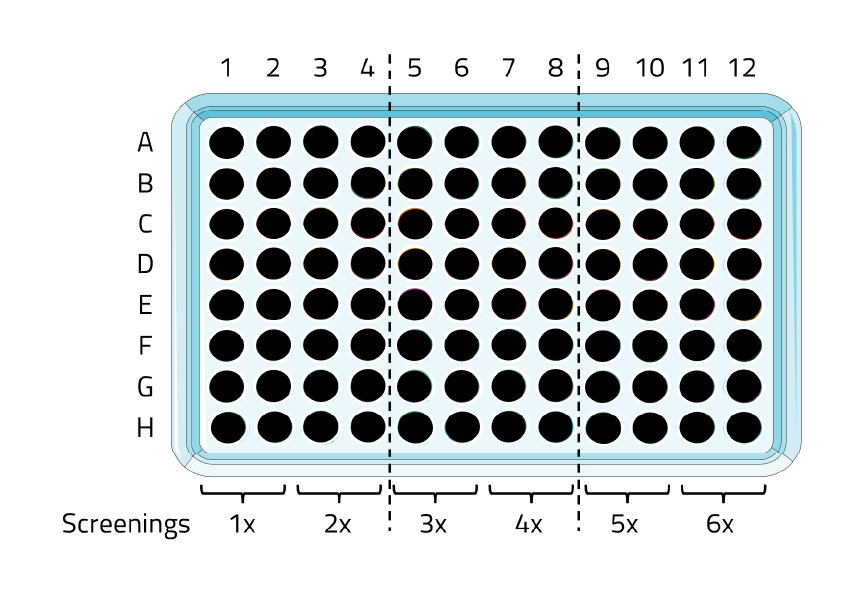

How does the NativeMP™ Screening & Purification Plate workflow operate?
- Prepare your cell lysate
- Lyse your cells using your method of choice
- Centrifuge at 9,000 x g for 45 minutes
- Collect the supernatant
- Load the sample
- Transfer the supernatant into the NativeMP™ Screening Plate containing copolymers
- Prepare the purification plates
- Resuspend the MagBeads from the NativeMP™ Purification Plate
- Prepare three plates with identical loading schemes using wash buffer
- Prepare one additional plate with elution buffer
- Run the automated purification
- Load all plates into the KingFisher system
- Start the programmed workflow
- Collect your protein
- After approximately 90 minutes, collect your stabilized and purified membrane protein
- Lyse your cells using your method of choice
- Centrifuge at 9,000 x g for 45 minutes
- Collect the supernatant
- Transfer the supernatant into the NativeMP™ Screening Plate containing copolymers
- Resuspend the MagBeads from the NativeMP™ Purification Plate
- Prepare three plates with identical loading schemes using wash buffer
- Prepare one additional plate with elution buffer
- Load all plates into the KingFisher system
- Start the programmed workflow
- After approximately 90 minutes, collect your stabilized and purified membrane protein
Parallel Membrane Protein Screening on KingFisher – made to scale
Your Set targeted to your preferred Tag or choose single Plates – whatever suits your Research
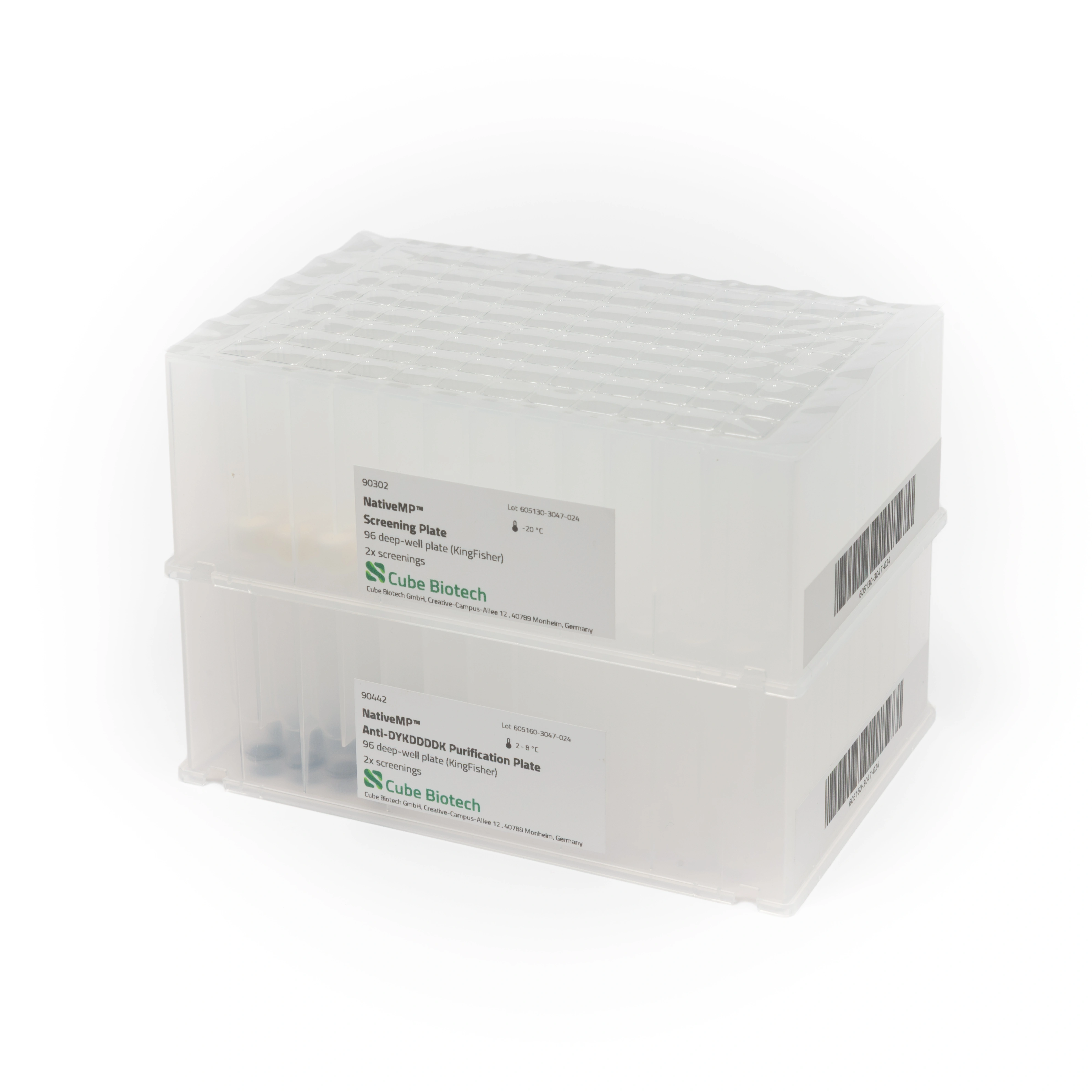
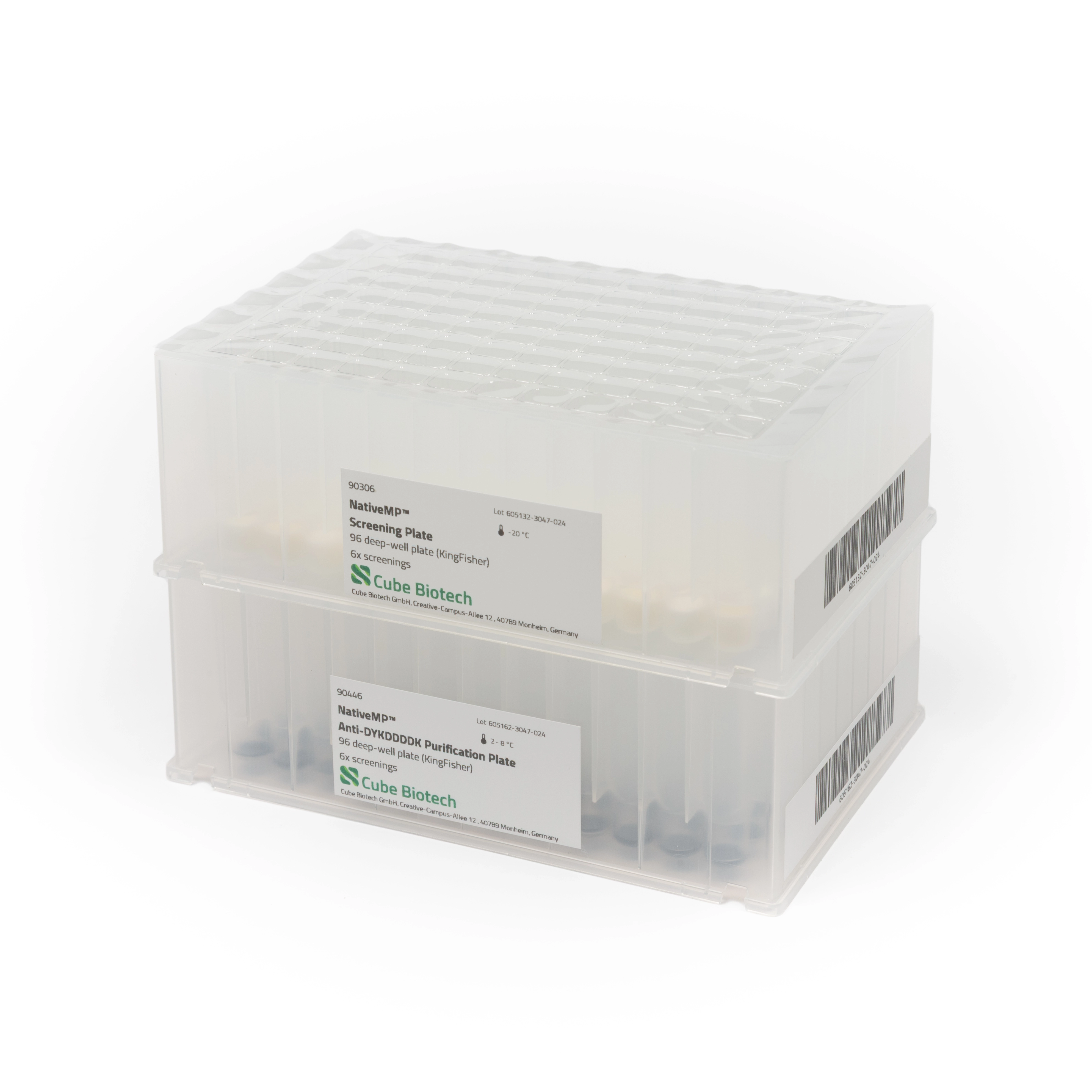
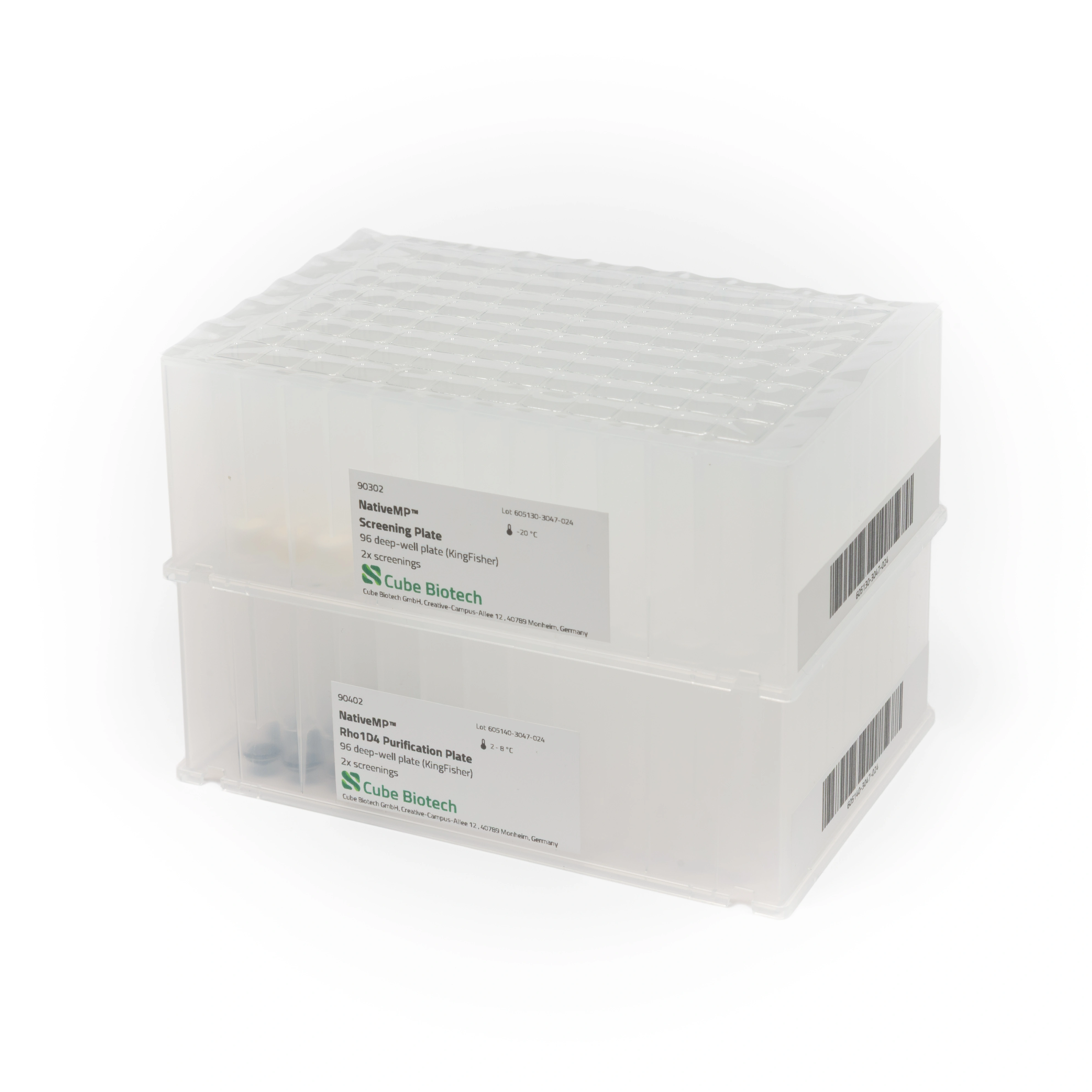
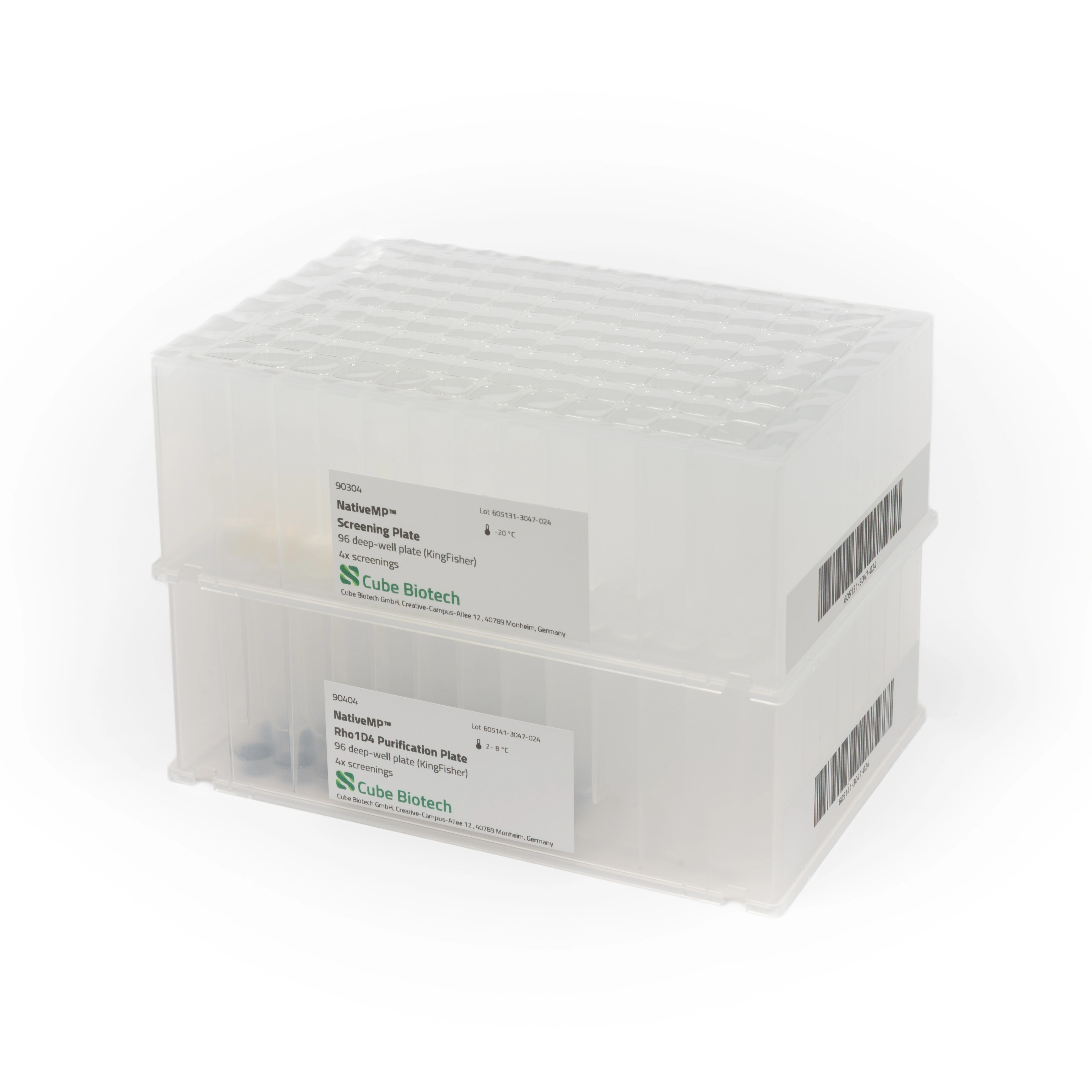
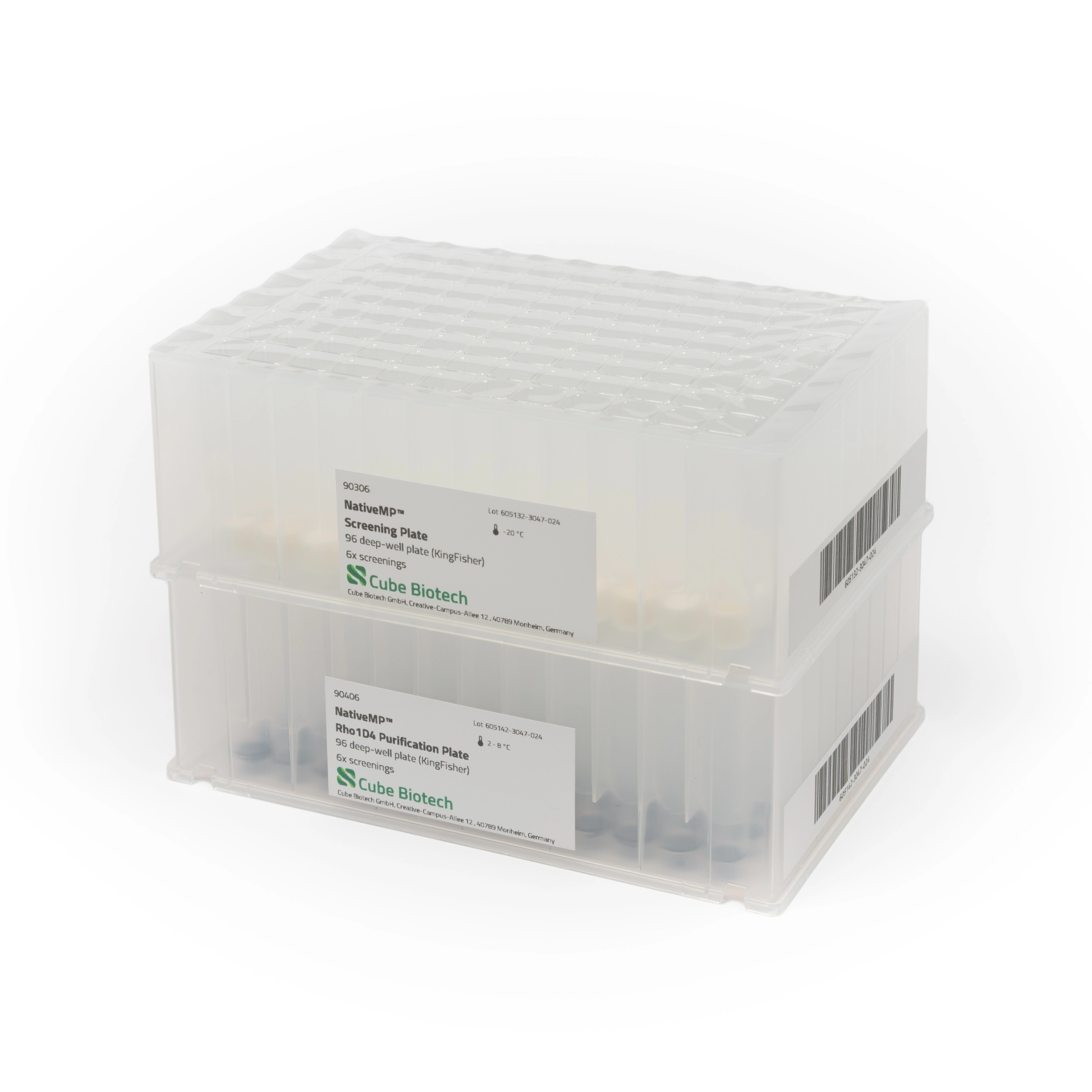
NativeMP™ Screening + Anti-DYKDDDDK Purification Plate Set
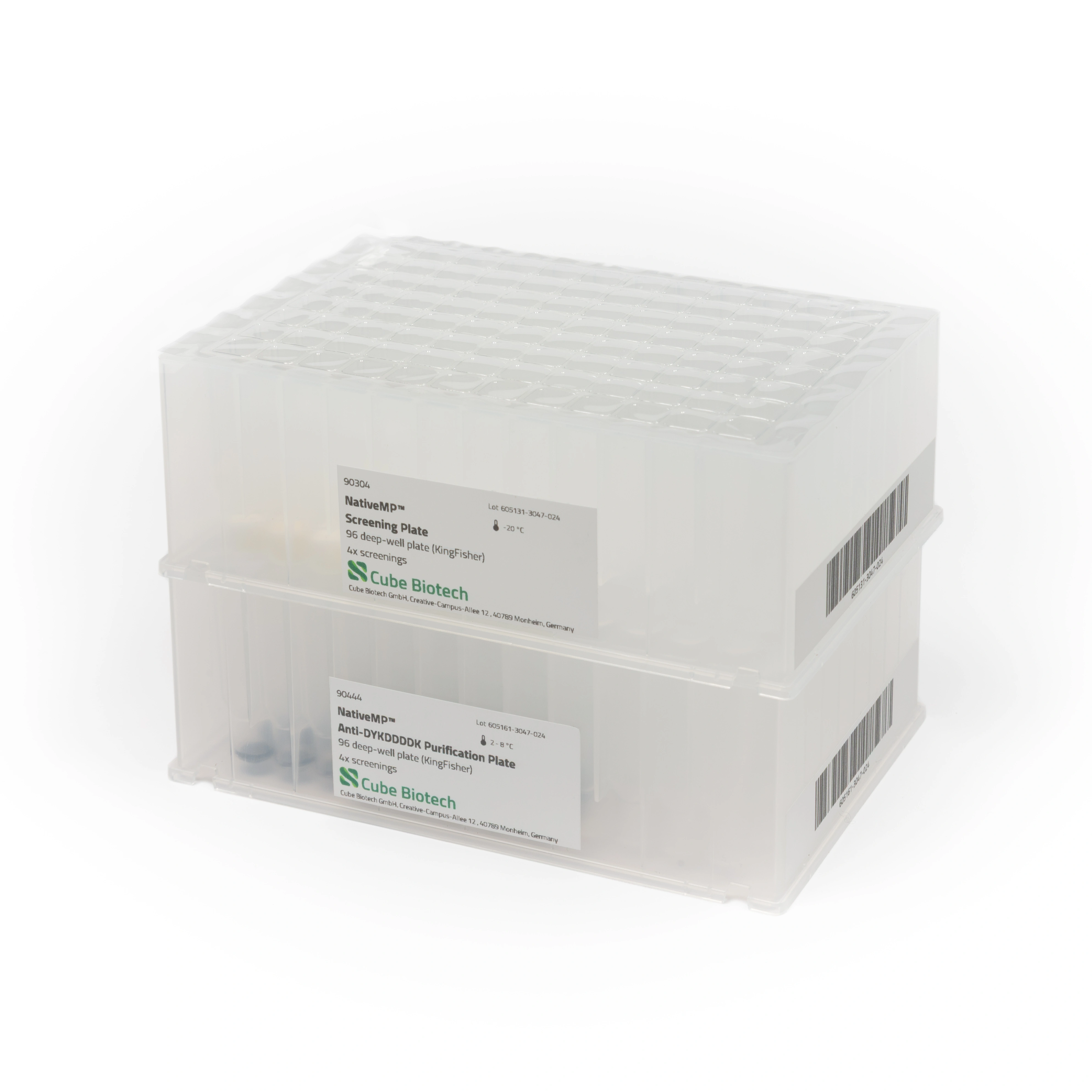
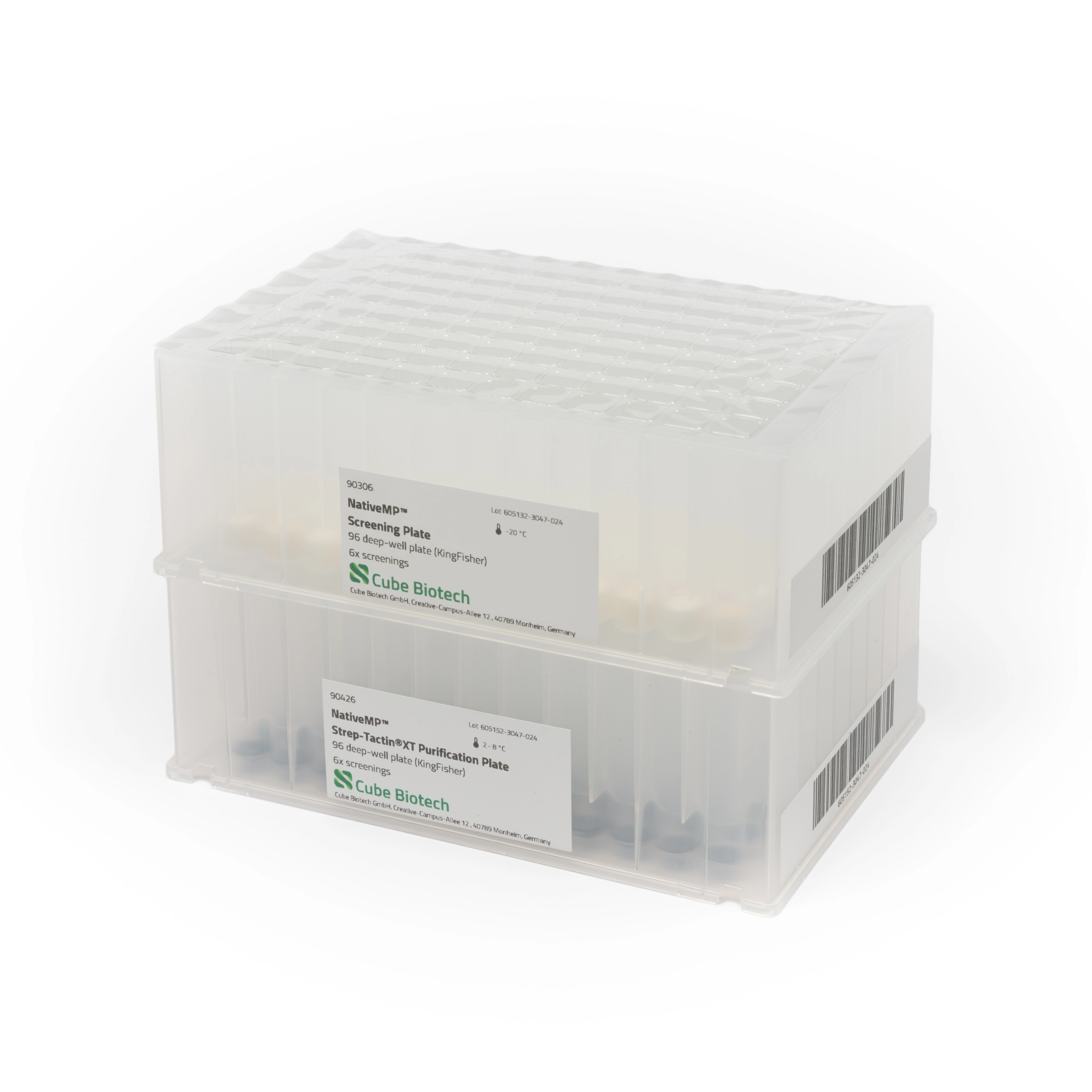
NativeMP™ Screening + Strep-Tactin®XT Purification Plate Set
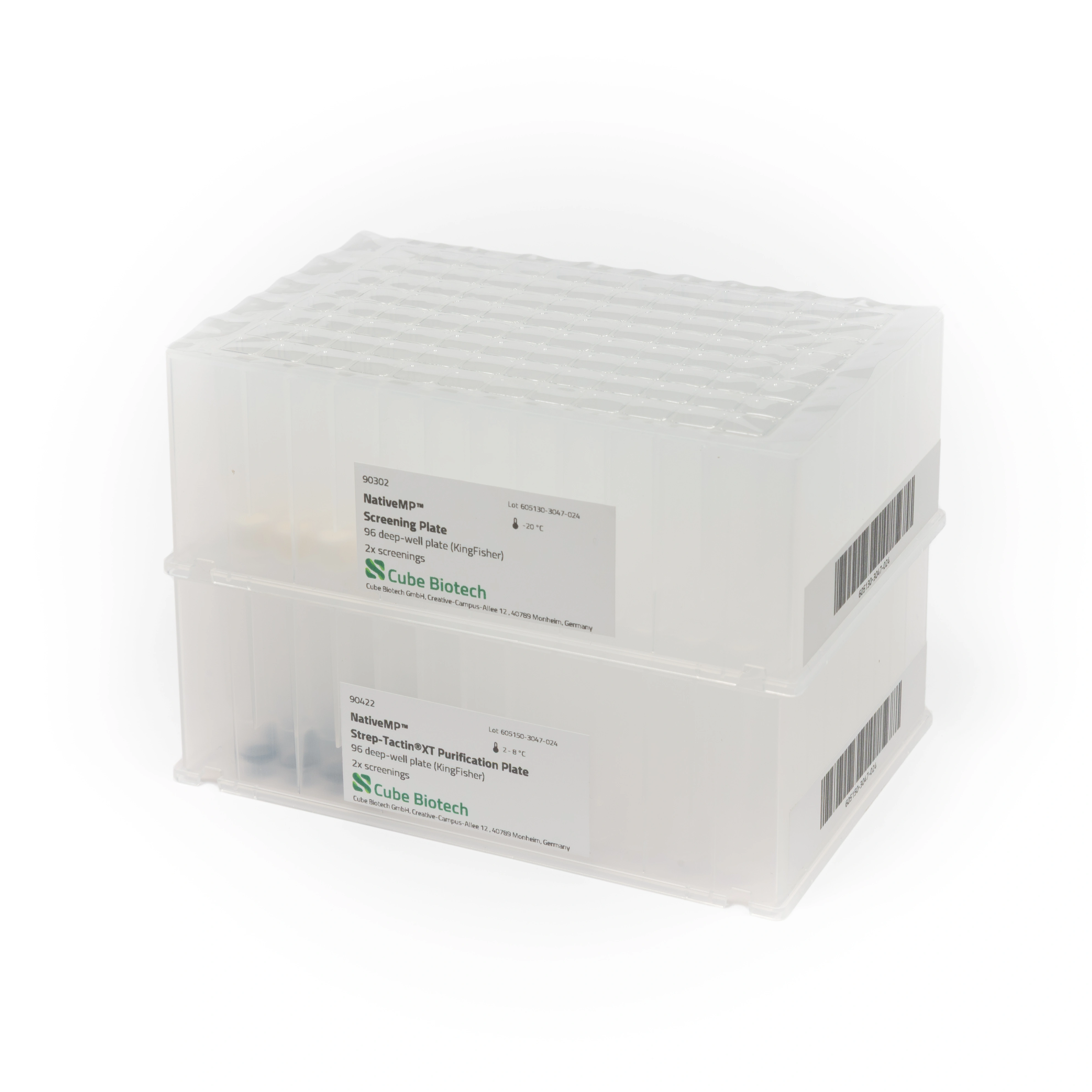
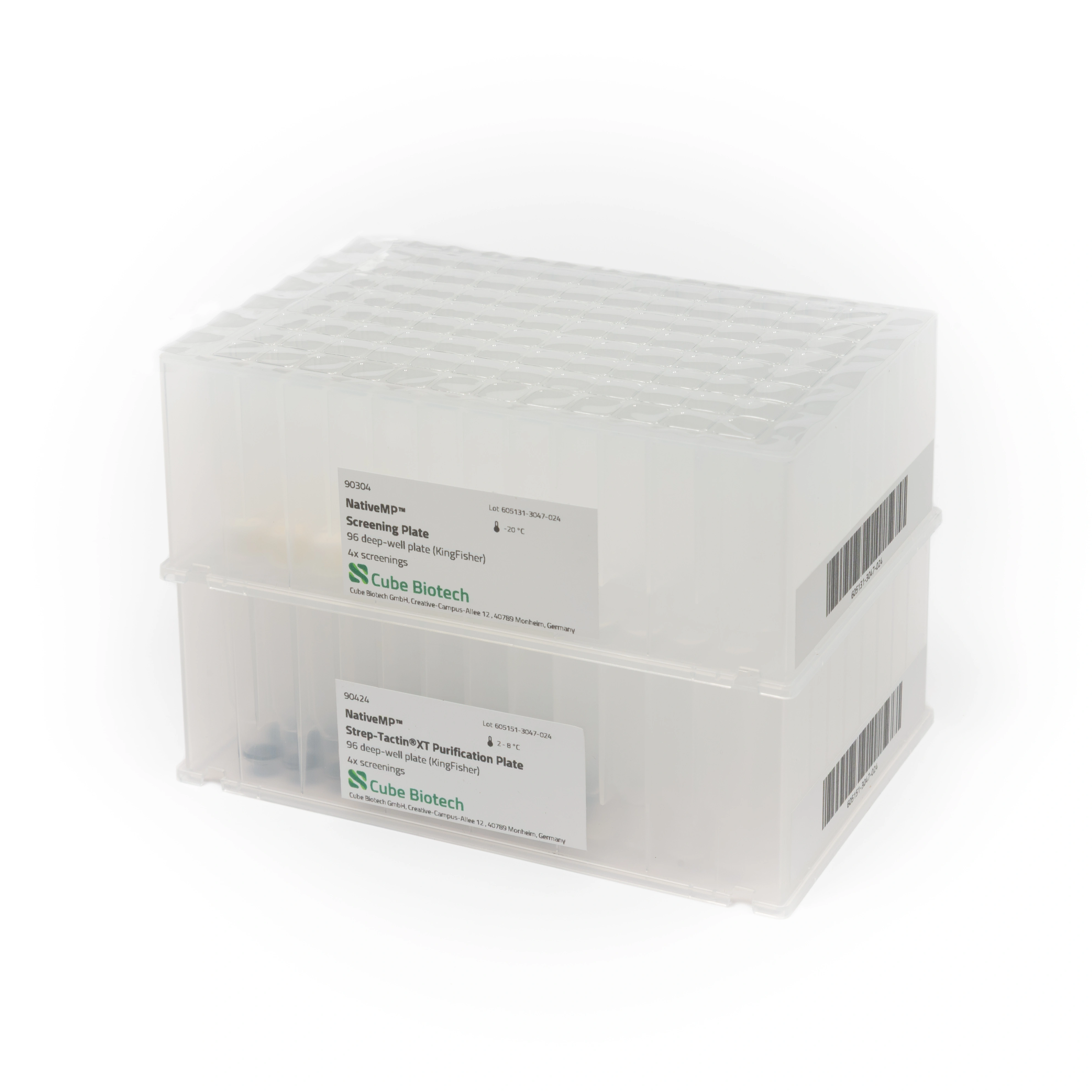
Save Time & Focus on Results.
Get from cell suspension to analytical-grade membrane proteins with ready-to-run plates in 90 min instead of 20 h
- 20× higher yield in just 90 minutes
- Parallel screening of 2, 4 or 6 targets in a single run
- Flexible purification tailored to your tag
- Scalable workflow with built-in reproducibility
Why NativeMP™ Screening & Purification Plates?
From screening to purification - in one seamless system
Eliminate workflow breaks and streamline your membrane protein pipeline from start to finish.
Reproducible, scalable, and efficient
Generate consistent results across experiments while easily scaling from small screens to larger studies.
Standardized condition screening
Reduce variability with a controlled, plate-based format designed for reliable and comparable results.
Flexible purification tailored to your tag
Adapt purification strategies to your specific affinity tag without changing the overall workflow.
Fully automated processing
Minimize hands-on time and obtain highly pure membrane proteins directly usable for Cryo-EM and analytical analysis.
NativeMP™ and PlateX MP™ FAQ
How much copolymer do I need to add to each buffer after solubilization?
What amount of cells do I need to add into the wells of the plates?
My membrane protein constructs carry the His-tag, do you also have these magnetic beads for His-tagged proteins?
We generally recommend against the His-tag when it comes to membrane proteins. It may generate the most yield, but it is comparatively low on purity, especially when compared to Rho1D4 or the Twin-Step-Tag. And with membrane proteins having a lower abundance than their soluble counterparts, it is better to use high-purity tags instead of high-yield ones.
The protein I am working with was previously solubilized with a copolymer that is not included in these plates. Why?
How is NativeMP™ different to SMALP?
What type of cells can I use with NativeMP™ ?
What type of sample can be used for NativeMP™ treatment? / How do I need to prepare my cells in before they come into contact with NativeMP™?
What expression scales are typical for solubilizing with these polymer-based nanodiscs?
What are the current protocols for running polymer-purified protein on SDS-PAGE? Is polymer removal still recommended? Or Polymer-specific?
At what temperature must I do the copolymer treatment? Do I have to move my automation hardware to the cold-room?
The wash buffers that I am using contain a small concentration of detergent (e.g. 0.1% Tween). Can NativeMP™ nanodiscs withstand that?
Are these single-use plates?
What assays can be run to characterize copolymer-stabilized proteins?
Our standard in-house procedure is to check protein/nanodisc integrity with DLS, NanoDSF, Coomassie staining, and Western blot.
Furthermore, copolymer-nanodisc-stabilized membrane proteins are perfectly suited for structure determination using cryo-EM. Structures we determined during test runs were equivalent to previously confirmed data—a definitive sign that the native conformation is maintained.
Does NativeMP™ keep membrane protein complexes together or only solubilized individual membrane proteins?
NativeMP™ Screening & Purification Plate Portfolio