


SGLT2 / SLC5A2 - Sodium/glucose cotransporter 2
Order number: 70621
Description
We are excited to introduce our off-the-shelf, full-length, active, and native Sodium/glucose cotransporter 2, commonly known as SLC5A2 or SGLT2. SGLT2 is a symporter that plays a critical role in the transportation of D-glucose. Additionally, it functions as a significant cotransporter in the process of glucose reabsorption within the kidneys. SGLT2 inhibitors have demonstrated efficiacy in the medical tratment of diabetes mellitus type 2, chronic heart failure, and chronic kidney insufficiency.
Co-expression with MAP17 is possible and can be ordered.
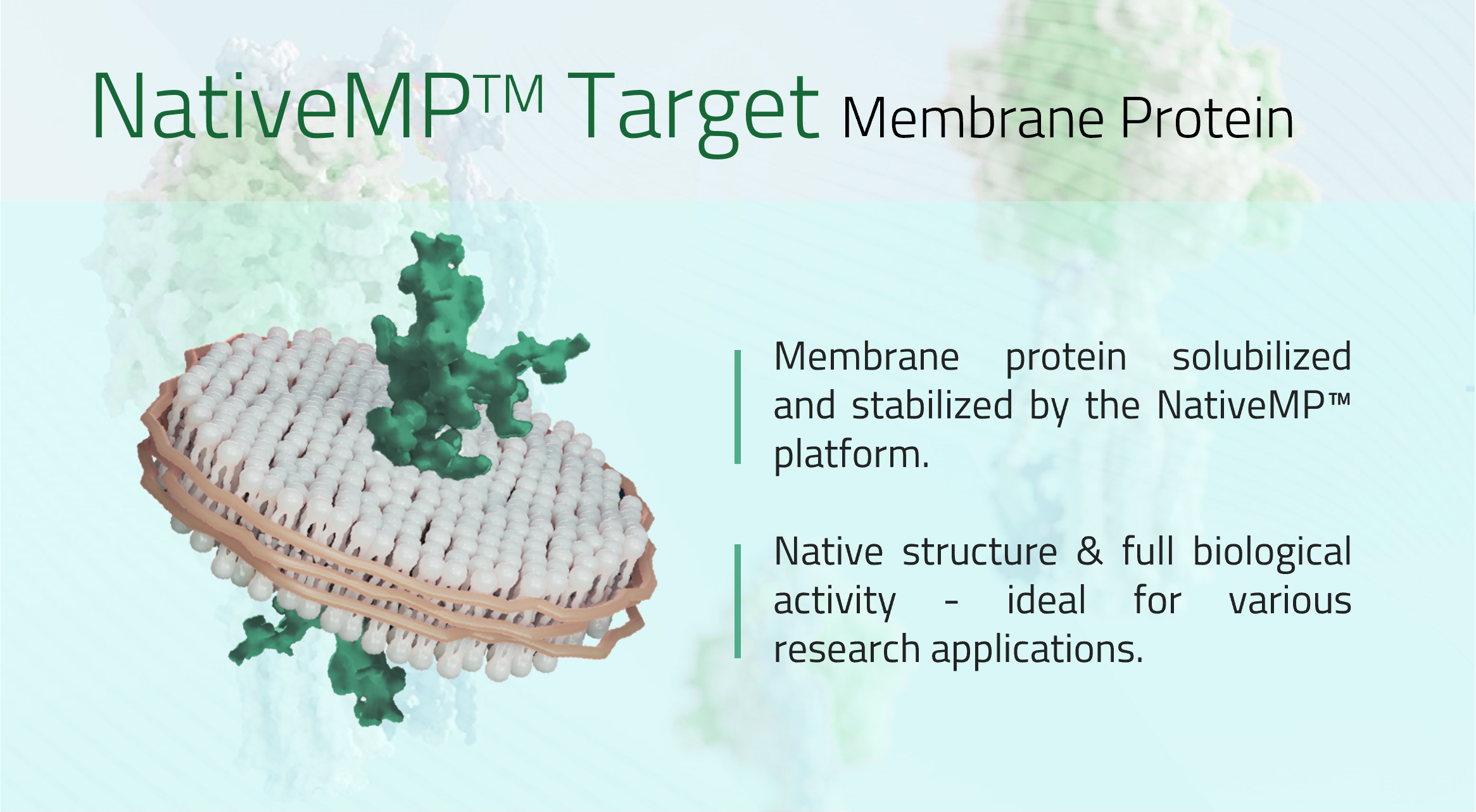
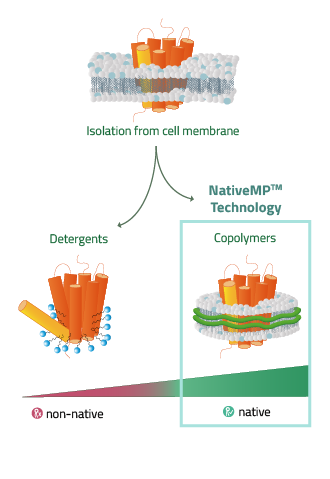
Our SLC5A2 protein has been solubilized and stabilized using our NativeMP™ platform, ensuring it retains its native structure and full biological activity, making it ideal for various research applications.
Applications:
- Screening/Validation
- Biologics Development
- Structure Determination
- Small Molecule Drug Development
The protein delivered can be used for these specific applications. When ordering, please indicate which applications you intend to use the protein for in the contact form to ensure the best results.
For more details, explore our solubilization database.
Datasheets
Upon ordering, you will receive the corresponding datasheets and the Certificate of Analysis (CoA).
| Feature | |
|---|---|
| Alternative names | Na(+)/glucose cotransporter 2, Low affinity sodium-glucose cotransporter, Solute carrier family 5 member, SLC5A2, SGLT2 |
| UniProt Number | P31639 |
| Protein class | SLC transporter |
| Original host | Homo sapiens |
| Expression system | HEK293 |
| Sequence, One-Letter Code | MEEHTEAGSAPEMGAQKALIDNPADILVIAAYFLLVIGVGLWSMCRTNRGTVGGYFLAGRSMVWWPVGASLFASNIGSGHFVGLAGTGAASGLAVAGFEWNALFVVLLLGWLFAPVYLTAGVITMPQYLRKRFGGRRIRLYLSVLSLFLYIFTKISVDMFSGAVFIQQALGWNIYASVIALLGITMIYTVTGGLAALMYTDTVQTFVILGGACILMGYAFHEVGGYSGLFDKYLGAATSLTVSEDPAVGNISSFCYRPRPDSYHLLRHPVTGDLPWPALLLGLTIVSGWYWCSDQVIVQRCLAGKSLTHIKAGCILCGYLKLTPMFLMVMPGMISRILYPDEVACVVPEVCRRVCGTEVGCSNIAYPRLVVKLMPNGLRGLMLAVMLAALMSSLASIFNSSSTLFTMDIYTRLRPRAGDRELLLVGRLWVVFIVVVSVAWLPVVQAAQGGQLFDYIQAVSSYLAPPVSAVFVLALFVPRVNEQGAFWGLIGGLLMGLARLIPEFSFGSGSCVQPSACPAFLCGVHYLYFAIVLFFCSGLLTLTVSLCTAPIPRKHLHRLVFSLRHSKEEREDLDADEQQGSSLPVQNGCPESAMEMNEPQAPAPSLFRQCLLWFCGMSRGGVGSPPPLTQEEAAAAARRLEDISEDPSWARVVNLNALLMMAVAVFLWGFYAGSSGTETSQVAPA |
| Affinity tags | Rho1D4-tag (C-terminal) |
| Size (excluding additional elements) | 685 amino acids, 74 kDa |
| Co-expression with | MAP17 (UniProt ID: Q13113) |
| Concentration | 0.4 - 0.7 mg/ml |
| Purity | >90%, determined via SDS-PAGE |
| Purification process | 2-step purification |
| Shipping | Shipment is carried out on dry-ice for temperature stability to ensure the integrity of the product. |
| Function | Receptor for TNFSF6/FASLG. The adapter molecule FADD recruits caspase-8 to the activated receptor. The resulting death-inducing signaling complex (DISC) performs caspase-8 proteolytic activation which initiates the subsequent cascade of caspases (aspartate-specific cysteine proteases) mediating apoptosis. FAS-mediated apoptosis may have a role in the induction of peripheral tolerance, in the antigen-stimulated suicide of mature T-cells, or both. The secreted isoforms 2 to 6 block apoptosis (in vitro). {ECO:0000269|PubMed:19118384, ECO:0000269|PubMed:7533181}. |
| PubMed ID | 1415574, 28592437, 20980548, 34880493, 37217492, 38057552, 14614622 |
 Powered by Bioz
